
Ways of living · One long page
Saint-Exupéry and the Little Prince
Antoine de Saint-Exupéry (1900-1944) was a French writer and aviator, best known for The Little Prince [1]. This page has two parts: where his life as a pilot took him, place by place, and seven ideas from the book, one station at a time. The quotations are in the original French, because the book and every English translation of it are still in copyright.
Part one His life, place by place
1900
Lyon
Born in Lyon
Antoine de Saint-Exupéry was born in Lyon on 29 June 1900, the third of five children of an aristocratic family [1]. His father died before he turned four, and the family became what Wikipedia calls impoverished aristocrats [1]. His younger brother François died of rheumatic fever at fifteen; Wikipedia reports a biographer's view that the scene was later reworked into the ending of The Little Prince [1].
1912
Ambérieu-en-Bugey
The first flight
He made his first flight in July 1912 at the civil aerodrome of Bellièvre, at Ambérieu-en-Bugey [2].
1921-1922
Strasbourg
Learning to fly
After failing his naval academy exams twice and drifting through odd jobs, he began his military service in 1921 with a cavalry regiment and was sent to Neuhof, near Strasbourg [1]. He took private flying lessons there, was offered a transfer to the air force the next year, and received his pilot's wings after a posting to the 37th Fighter Regiment in Casablanca [1].
1926-1927
Toulouse
Airmail, Toulouse to Dakar
By 1926 he was flying again, for the airline Latécoère, later Aéropostale, on the mail route between Toulouse and Dakar [1]. Wikipedia says the aircraft of those early days had few instruments [1]. His first novel, Courrier sud (1929), chronicles his time on the Casablanca to Dakar leg [1].
1927-1928
Cape Juby (Tarfaya)
Station chief at the edge of the desert
He became the Aéropostale station manager at Cape Juby, in the Spanish zone of southern Morocco, in 1927 [3] [1]. Wikipedia gives his stay as 18 months in one article and two years in another [3]. His duties included negotiating the release of downed fliers held by tribes in the Sahara, which earned him his first Légion d'honneur in 1930 [1] [3]. Cape Juby is on the coast of southern Morocco, near the border with Western Sahara [4].
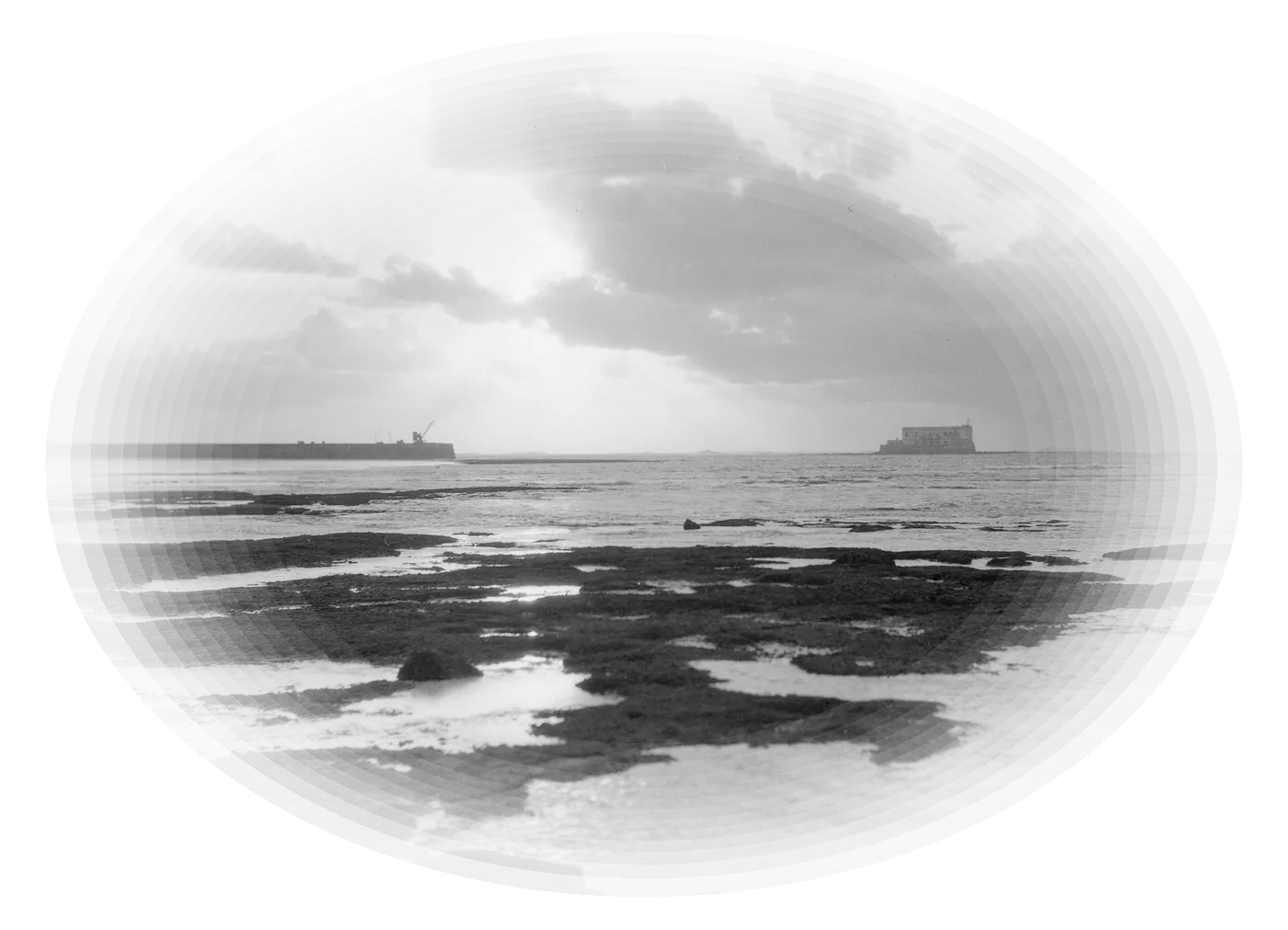
Evening at Cape Juby, 15 January 1931. Credit in the notes. 1929-1931
Buenos Aires
Argentina, Patagonia and the Andes
In 1929 he was transferred to Argentina as director of the Aeroposta Argentina airline, based in Buenos Aires, surveying new routes and sometimes flying the mail [1]. On 1 November 1929 he flew the first flight of the Buenos Aires to Comodoro Rivadavia route, and on 31 March 1930 the inaugural flight to Río Gallegos in a Latécoère 28 [5], a type Wikipedia says Aéropostale's pilots flew, naming him among them [6]. His friend Henri Guillaumet crashed in the Andes on 13 June 1930, walked for a week and was found on 19 June; Saint-Exupéry had come to look for him and later told the story in Terre des hommes [7]. His novel Vol de nuit (1931), drawn from his time as a mail pilot and in Buenos Aires, won the Prix Femina [1] [8]. In 1931 he married Consuelo Suncín; one Wikipedia article says at Grasse and another that they met and married in Buenos Aires [1] [9].
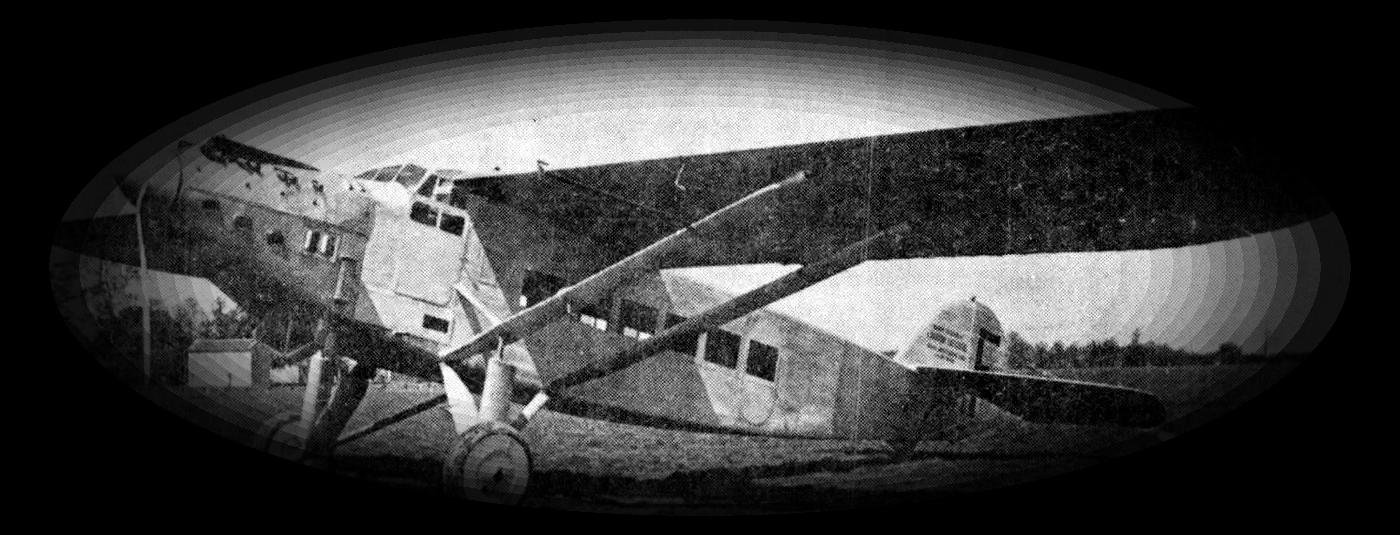
Latécoère 28 (NACA Aircraft Circular No. 112, March 1930). A picture of the type, not of his own aircraft. Credit in the notes. 1935
The desert near Wadi El Natrun (site uncertain)
Four days in the desert
The map marks this point with a dashed ring: the sources do not fix it.
On 30 December 1935, after almost twenty hours in the air, he and his co-pilot and navigator André Prévot crashed in the desert during an attempt to break the Paris to Saigon speed record [10]. The plane was a Caudron C.630 Simoun, a 1930s four-seat touring monoplane [10] [11]. Wikipedia places the crash in the Libyan Desert [1], between Benghazi and Cairo [12], and thinks the site was near Wadi Natrun, close to the Nile Delta [10]; the National WWII Museum says only the Sahara [13]. Both men survived, with little water and no radio, and on the fourth day a Bedouin on a camel found them and gave them water [10]. The memoir Terre des hommes (1939) tells it [12], and Wikipedia says the stranded narrator of The Little Prince clearly drew on this experience [10].
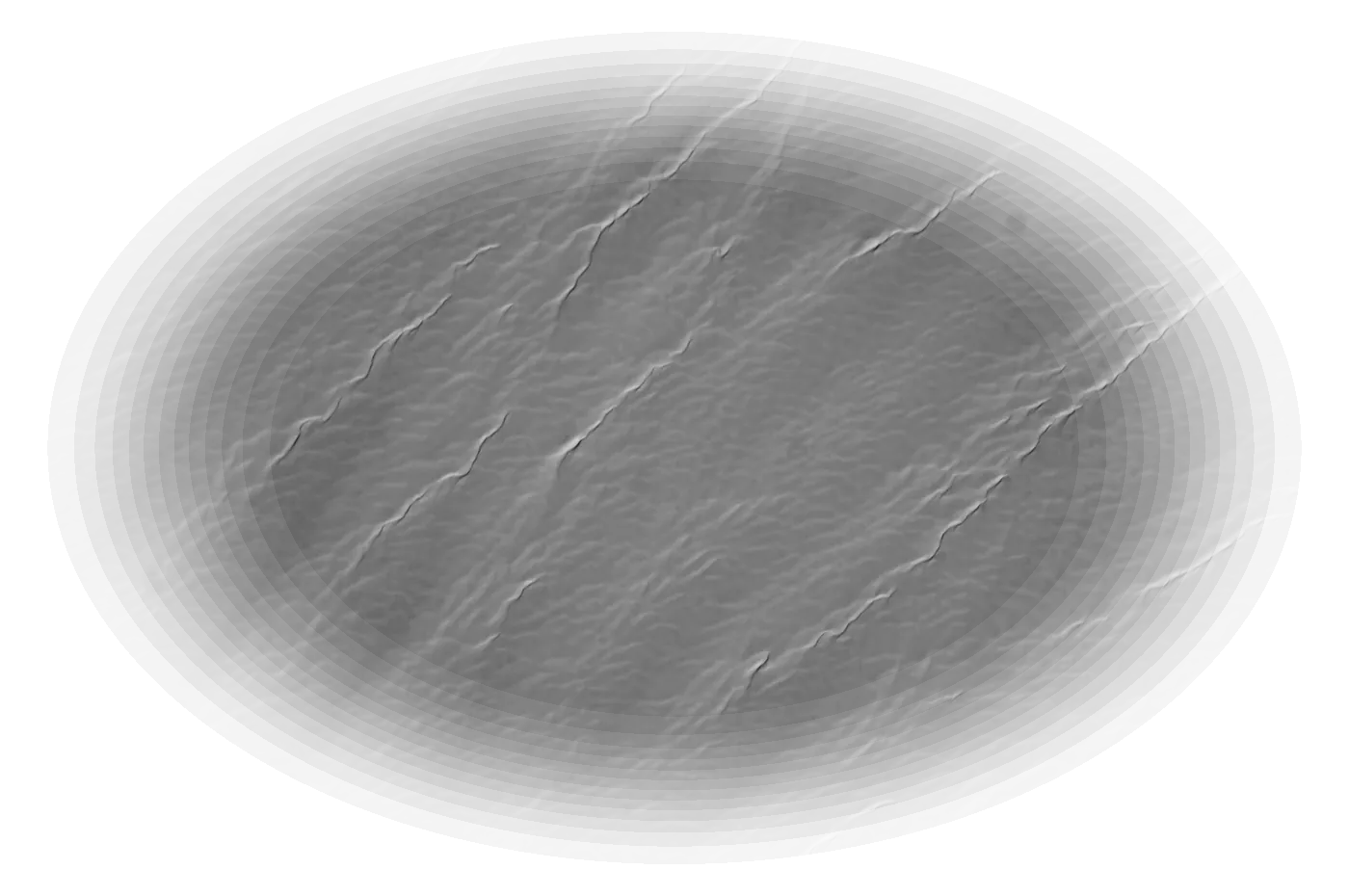
View of Libya taken during ISS Expedition 18. Credit in the notes. 1938
Guatemala City
Another crash
He reached New York in January 1938 to prepare a long-distance record attempt from New York to Tierra del Fuego in a Caudron Simoun, and took off on 15 February [14]. The plane crashed at the end of the runway in Guatemala City and he was seriously injured; he spent a long recovery in New York, where he signed a contract for the book that became Wind, Sand and Stars [14]. Wikipedia counts five serious crashes in all and says the injuries left him in pain and unable to turn his head to the left or dress himself unaided by 1943 [1] [13].
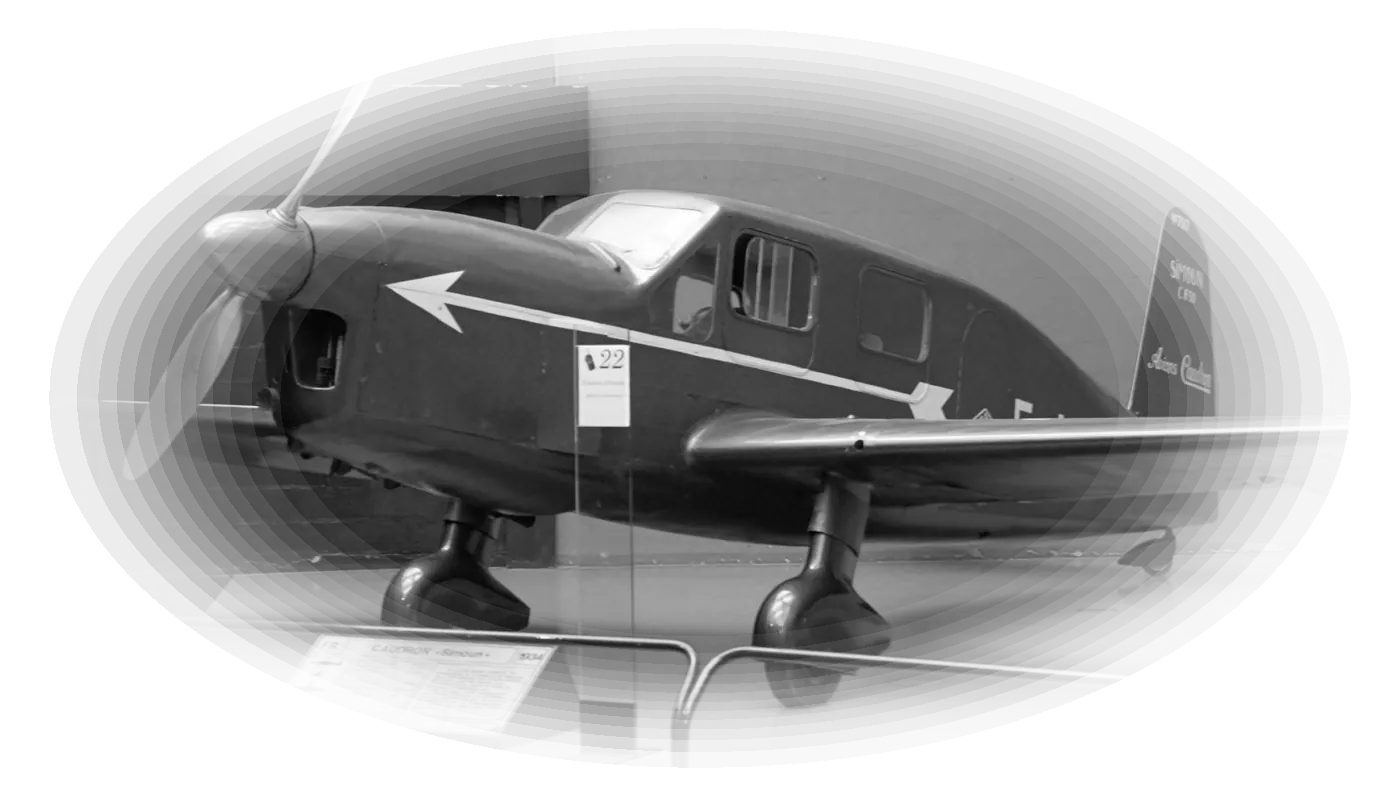
A Caudron Simoun C.630 at the Musée de l'Air et de l'Espace, Le Bourget (not his aircraft). Credit in the notes. 1939-1940
Orconte
Reconnaissance in the Battle of France
When the Second World War began he flew reconnaissance missions with Group II/33 of the French air force until the armistice of 1940 [1]. He stayed in the commune of Orconte in the winter of 1939 with the group, and described the farm where he lived in Pilote de guerre (1942; Flight to Arras in English) [15] [1].
1941-1943
New York
Exile in New York
After the armistice he went into exile and reached New York on the last day of 1940, hoping to bring the United States into the war [1]. He lived in New York and on Long Island between January 1941 and April 1943 [1]. At the urging of the wife of one of his publishers, who thought it would calm him, he wrote and illustrated The Little Prince in 1942, finishing the manuscript in October [1] [10]. It came out in English and in French from Reynal & Hitchcock in April 1943, and in France only after its liberation [10].
1943-1944
Algiers
Back to the squadron
In April 1943 he left with an American military convoy for Algiers, aged 43 and well over the age limit for such pilots, after an exemption had finally been approved [1]. He was assigned to his old reconnaissance unit, now flying P-38 Lightnings, and after seven weeks of training flew the F-5B, a reconnaissance version of the P-38 [1]. A crash on his second mission grounded him for eight months, and he flew again after the intervention of General Ira Eaker [1].
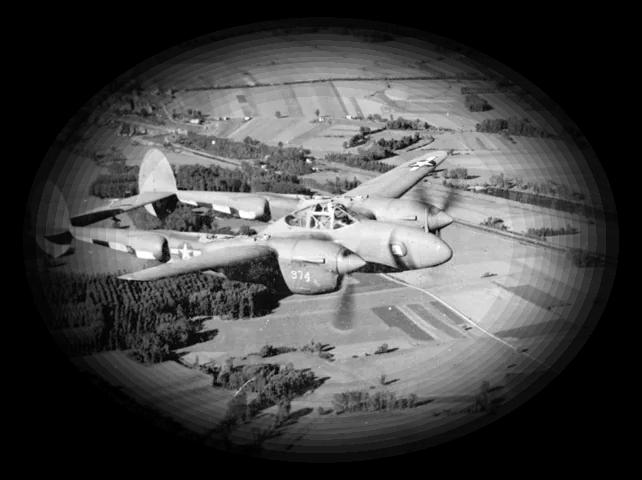
USAAF Lockheed F-5E-2-LO Lightning, about 1944. A picture of the type, not of his own aircraft. Credit in the notes. 1944
Borgo, Corsica
The last flight
On 31 July 1944 he took off from an airbase on Corsica in an unarmed Lightning on a reconnaissance mission over the Rhône valley before the Allied landing in southern France, and did not return [1]. Sources differ on whether it was his seventh, eighth, ninth or tenth mission [1]. The Ministry of Culture says the plane appeared on radar one last time and then disappeared; he was declared Mort pour la France in 1948 [16]. Bastia-Poretta airport is in Borgo [17].
1998-2004
Off Marseille, near Riou Island (approximate)
Found at sea
The map marks this point with a dashed ring: the sources do not fix it.
On 7 September 1998 a Marseille fisherman, Jean-Claude Bianco, found a chain bracelet bearing the aviator's name in his nets [16]. In 2000 the Marseille diver Luc Vanrell identified what were probably the plane's remains in 85 metres of water near the island of Riou; pieces brought up in 2003 included a panel marked with the serial number 2734 L [16]. In 2004 French officials and the underwater archaeology department confirmed the wreckage as his aircraft, and in June 2004 the fragments went to the Musée de l'Air et de l'Espace [1]. No bullet marks were found, but only a small part was recovered, so Wikipedia treats that as not significant [1]. The cause of the crash is still unknown [1] [16].
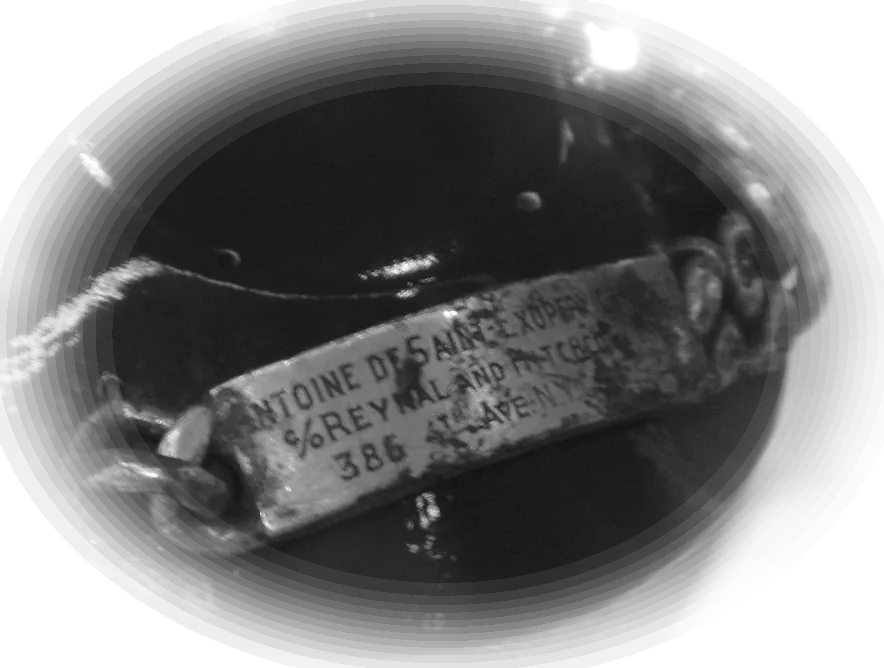
The bracelet of Saint-Exupéry, found by Jean-Claude Bianco in 1998. Credit in the notes. 2008
Off Marseille (approximate)
A claim, not a finding
The map marks this point with a dashed ring: the sources do not fix it.
In 2008 a journalist from La Provence got an account from the former Luftwaffe pilot Horst Rippert (1922-2013), who said that he had become certain he had shot the plane down after learning where the wreckage lay; in his memoirs he had only expressed fears and doubts [1]. Rippert said he reported the kill by radio; no surviving record can verify that, and contemporary archives offer no evidence for his claim [1]. Comrades doubted it, in part because he kept it private for 64 years [1]. Wikipedia concludes that the cause of death remains unknown and that his account is one hypothesis among many [1]. Two earlier claims, in 1948 and 1972, were also met with doubt [1].
A dashed ring marks a point the sources do not fix.
Part two The book, in seven stations
I Station 1 of 7
The grown-ups
Les grandes personnes sont décidément très très bizarres
This page's own rendering: Grown-ups are decidedly very, very strange.
The adults the prince meets each care about one thing, and miss what it is for.
After leaving his own planet the prince visits six others, each with one adult on it: a king, a conceited man, a tippler, a businessman, a lamplighter and a geographer [10]. The king gives only orders that can be obeyed; the conceited man wants to be admired; the tippler drinks to forget that he is ashamed of drinking; the businessman counts the stars in order to own them [10]. The geographer records what an explorer tells him and has never been anywhere [10]. The book opens with the same point: the narrator's drawing of a boa that has swallowed an elephant is read by the grown-ups as a hat [10].
II Station 2 of 7
The rose
Tu deviens responsable pour toujours de ce que tu as apprivoisé.
This page's own rendering: You become responsible for ever for what you have tamed.
Love is care for one particular, difficult thing, and it is hard to see that while you are beside it.
The prince leaves a rose behind on his asteroid; she exaggerates ailments and coughs to be looked after, and he gives her a screen and a glass globe [10]. He falls in love and also begins to feel taken advantage of, so he goes; at the goodbye she apologises for not having shown she loved him [10]. Many researchers believe the rose was inspired by Saint-Exupéry's wife Consuelo; the biographer Paul Webster is quoted as saying so, and Wikipedia adds that the field of roses the prince meets on Earth is read as standing for the author's infidelity [10]. That reading is theirs, not the book's. The quotation is from chapter XXI, the fox's chapter, after the prince has met a row of rosebushes and thought his rose less unique [10] [18].
III Station 3 of 7
The baobabs
Pulled up: 0. Growing: 3.
Quand on a terminé sa toilette du matin, il faut faire soigneusement la toilette de la planète.
This page's own rendering: When you have finished your own morning grooming, you must carefully groom the planet.
Small chores done every day keep a small world from being overrun.
On the prince's asteroid he cleans the volcanoes and pulls up baobab shoots before they take over the surface [10]. Researchers have contended that the baobabs were meant to represent Nazism trying to destroy the planet [10]. That is a reading some critics give, not something the book says. The quotation is from chapter V, where the narrator says the prince told him later that it was a question of discipline [19].
IV Station 4 of 7
The chair and the sunsets
Sunsets watched: 0. In the French text: 43 in chapter VI, 44 in chapter X, the king's (see the notes).
Tu sais… quand on est tellement triste on aime les couchers de soleil…
This page's own rendering: You know... when you are so sad, you love sunsets...
On a very small planet, you can chase the sunset by moving your chair.
Wikipedia says that the book's small planet, where all that is needed to watch a sunset is to move your chair a few steps, came in part from the sunsets Saint-Exupéry watched at the Bevin House in Asharoken on Long Island, where he wrote [10]. The number of sunsets in a day is 43 in chapter VI of the French text read and 44 in the king's chapter, X (see the notes) [18] [19]. The lamplighter's planet is the extreme case, with a day of a minute and 1,440 sunsets in a day [10].
V Station 5 of 7
The fox
On ne voit bien qu’avec le cœur. L’essentiel est invisible pour les yeux.
This page's own rendering: One sees well only with the heart. What matters most is invisible to the eyes.
To tame something is to make it unlike all the others, and the essential is not visible to the eyes.
Crying in a field of rosebushes, the prince meets a fox who asks to be tamed and shows him how [10]. Being tamed makes something ordinary into something special, and the fox tells him that his rose is special because he gave her his time; leaving, the fox says that important things can only be seen with the heart [10]. English Wikipedia reports a belief that the fox was modelled on Saint-Exupéry's New York friend Silvia Hamilton Reinhardt, and that she suggested the book's best-known line; it gives these as beliefs, not as established fact [10].
VI Station 6 of 7
The well
Move across the sand, or tap it, to look.
Ce qui embellit le désert, dit le petit prince, c’est qu’il cache un puits quelque part…
This page's own rendering: What makes the desert beautiful, said the little prince, is that it hides a well somewhere...
The desert is made beautiful by what it hides.
In the desert, near death from thirst, the prince insists that a well must be somewhere, and the narrator finds one at dawn [10]. Saint-Exupéry had come close to dying of thirst in the desert himself in December 1935, and was saved by a Bedouin who gave him water [10]. Wikipedia says the narrator's stranding clearly drew on that ordeal [10].
VII Station 7 of 7
The stars that laugh
Quand tu regarderas le ciel, la nuit, puisque j’habiterai dans l’une d’elles, puisque je rirai dans l’une d’elles, alors ce sera pour toi comme si riaient toutes les étoiles.
This page's own rendering: When you look at the sky at night, since I will be living on one of them, since I will be laughing on one of them, then for you it will be as if all the stars were laughing.
The prince's farewell leaves the narrator the night sky.
At the end the prince tells the narrator that his body is too heavy to take home, and that when the narrator looks at the stars it will seem to him that all of them are laughing [10]. Wikipedia notes that the reassurance about the body resembles the last words of Saint-Exupéry's younger brother François [10]. The book was published in April 1943, and a few weeks later he was on his way back to the war [10].
The bookshelf
His books as Wikipedia lists them, in plain jackets.
Books in his lifetime
L'Aviateur
1926 · In English: The Aviator
A short story, in a short-lived magazine; in English in the anthology A Sense of Life.
Courrier sud
1929 · In English: Southern Mail
His first book; about the Casablanca to Dakar mail route.
Vol de nuit
1931 · In English: Night Flight, 1932
Won the Prix Femina.
Terre des hommes
1939 · In English: Wind, Sand and Stars, 1939
The French and English versions differ; Grand Prix du roman de l'Académie française, and in English the US National Book Award.
Pilote de guerre
1942 · In English: Flight to Arras
Le Petit Prince
1943 · In English: The Little Prince, 1943
First published in English and in French in New York in April 1943, in France after its liberation.
Lettre à un otage
1944 · In English: Letter to a Hostage
Published after his death in English.
Published after his death
Citadelle
1948 · In English: The Wisdom of the Sands
Won the Prix des Ambassadeurs.
Un sens à la vie
1956 · In English: A Sense of Life
Écrits de guerre, 1939-1944
1982 · In English: Wartime Writings, 1939-1944
Notes and picture credits
Notes and sources
- [1] Wikipedia: Antoine de Saint-ExupéryReference. Antoine de Saint-Exupéry. Wikipedia, revision 1387208604.
- [2] Wikipedia: Ambérieu-en-BugeyReference. Ambérieu-en-Bugey. Wikipedia, revision 1385471862.
- [3] Wikipedia: TarfayaReference. Tarfaya. Wikipedia, revision 1379010211.
- [4] Wikipedia: Cape JubyReference. Cape Juby. Wikipedia, revision 1367477423.
- [5] Wikipedia: Aeroposta ArgentinaReference. Aeroposta Argentina. Wikipedia, revision 1387207067.
- [6] Wikipedia: Latécoère 28Reference. Latécoère 28. Wikipedia, revision 1347714085.
- [7] Wikipedia: Henri GuillaumetReference. Henri Guillaumet. Wikipedia, revision 1378516747.
- [8] Wikipedia: Night Flight (novel)Reference. Night Flight (novel). Wikipedia, revision 1384293869.
- [9] Wikipedia: Consuelo de Saint-ExupéryReference. Consuelo de Saint-Exupéry. Wikipedia, revision 1386420609.
- [10] Wikipedia: The Little PrinceReference. The Little Prince. Wikipedia, revision 1386179137.
- [11] Wikipedia: Caudron SimounReference. Caudron Simoun. Wikipedia, revision 1338295781.
- [12] Wikipedia: Wind, Sand and StarsReference. Wind, Sand and Stars. Wikipedia, revision 1384798460.
- [13] National WWII Museum: The Little Prince's Last FlightReference. "The Little Prince's Last Flight: The Story of Antoine de Saint-Exupéry", The National WWII Museum, New Orleans. Read 2026-11-22 as a page summary.
- [14] Embassy of France in the US: the New York - Tierra del Fuego racePrimary source. "Saint-Exupéry's air race: New York - Tierra del Fuego", France in the United States, Embassy of France in the United States (Press and Communication Office), 6 January 2023. Read 2026-11-22 as a page summary.
- [15] Wikipedia: OrconteReference. Orconte. Wikipedia, revision 1381876391.
- [16] French Ministry of Culture: the P-38 flown by Saint-ExupéryPrimary source. "The P38 flown by Saint-Exupéry (Bouches du Rhône)", Underwater archaeology (DRASSM, French Ministry of Culture), archeologie.culture.gouv.fr. Read 2026-11-22.
- [17] Wikipedia: Borgo, Haute-CorseReference. Borgo, Haute-Corse. Wikipedia, revision 1381803330.
- [18] Le Petit Prince, full text (Hitotsubashi University course PDF)Primary source. Antoine de Saint-Exupéry, Le Petit Prince, full French text as a PDF on the course pages of the Faculty of Economics, Hitotsubashi University, Tokyo. A transcription, not a facsimile; it has typing slips and plain-ASCII accents.
- [19] Le Petit Prince, full text (Académie de la Guyane PDF)Primary source. Antoine de Saint-Exupéry, Le Petit Prince, French text as a PDF on the site of a circonscription of the Académie de la Guyane (French Ministry of Education), circo-kourou-2.eta.ac-guyane.fr. A transcription; it stops before the last chapters.
- [20] Le Petit Prince, text on the Internet Archive (cross-check only)Reference. "Antoine De Saint Exupery - Le Petit Prince - 1943", an anonymous upload (2019) of a text of Le Petit Prince on the Internet Archive; not a scan of the 1943 edition. Read as a cross-check of the sunsets count only.
- [21] Wikipédia: Le Petit PrinceReference. Le Petit Prince. Wikipédia (French), revision 241268149.
- [22] Quote Investigator: "Teach Them to Yearn for the Vast and Endless Sea"Reference. "Quote Origin: Teach Them to Yearn for the Vast and Endless Sea", Quote Investigator, posted 25 August 2015, updated 16 January 2025. Read 2026-11-22 as a page summary.
- [23] Le Petit Prince, typescript of chapters (Académie de Nancy-Metz PDF)Primary source. Antoine de Saint-Exupéry, Le Petit Prince, typescript of chapters II, III, V, VI, VIII and XVII to XXVII, a PDF on the site of the inspection of Metz-Sud, Académie de Nancy-Metz (French Ministry of Education), sites.ac-nancy-metz.fr.
The sunsets, as the French text prints them
- Chapter VI: 43. The narrator's memory of the prince's remark that he once saw the sun set that many times in one day; the same number comes back a few lines later.
- Chapter X: 44. The king's planet: the prince reflects that if he had the king's power he could have watched not that many, but seventy-two, a hundred, even two hundred sunsets in a day, without moving his chair.
The French text says forty-three in chapter VI, twice, and forty-four in chapter X, in the three transcriptions read [18] [19] [20], and French Wikipedia's note on chapter VI gives forty-three [21]. English Wikipedia says the story was written with 43 sunsets and that posthumous editions often say 44, possibly in tribute [10]. So the two numbers are both in the French, in different chapters, and the 43 is the figure given for the chair. The same page records the lamplighter's planet, where a day lasts a minute, as 1,440 sunsets a day [10].
Pictures
- Evening at Cape Juby, 15 January 1931, Walter Mittelholzer (ETH-Bibliothek), 1931-01-15. Licence: Public domain (author died 1937). Modified: converted to grayscale, vignetted. Source: Wikimedia Commons.
- Latécoère 28 (NACA Aircraft Circular No. 112, March 1930), NACA, 1930-03-01. Licence: Public domain (US government work). Source: Wikimedia Commons.
- View of Libya taken during ISS Expedition 18, NASA, Earth Science and Remote Sensing Unit, Johnson Space Center, 2008-11-05. Licence: Public domain (NASA). Modified: converted to grayscale, contrast stretched and vignetted. Source: Wikimedia Commons.
- A Caudron Simoun C.630 at the Musée de l'Air et de l'Espace, Le Bourget (not his aircraft), PpPachy, 2007-08-11. Licence: CC BY-SA 3.0. Modified: cropped, converted to grayscale and vignetted for this page. Source: Wikimedia Commons.
- USAAF Lockheed F-5E-2-LO Lightning, about 1944, U.S. Air Force Historical Research Agency, 1944. Licence: Public domain (US government work). Source: Wikimedia Commons.
- The bracelet of Saint-Exupéry, found by Jean-Claude Bianco in 1998, Fredriga, 2009. Licence: Public domain (dedicated by the author). Source: Wikimedia Commons.
- The route map. Coastlines: Natural Earth, 110m land, public domain; clipped and projected for this page. The figures, the stars and the dunes are drawn for this page.