
Ways of living · One long page
Carl Jung and the shadow
For where is a height without an equal depth, and how can there be light that throws no shadow? No good ever appears that an evil does not oppose.
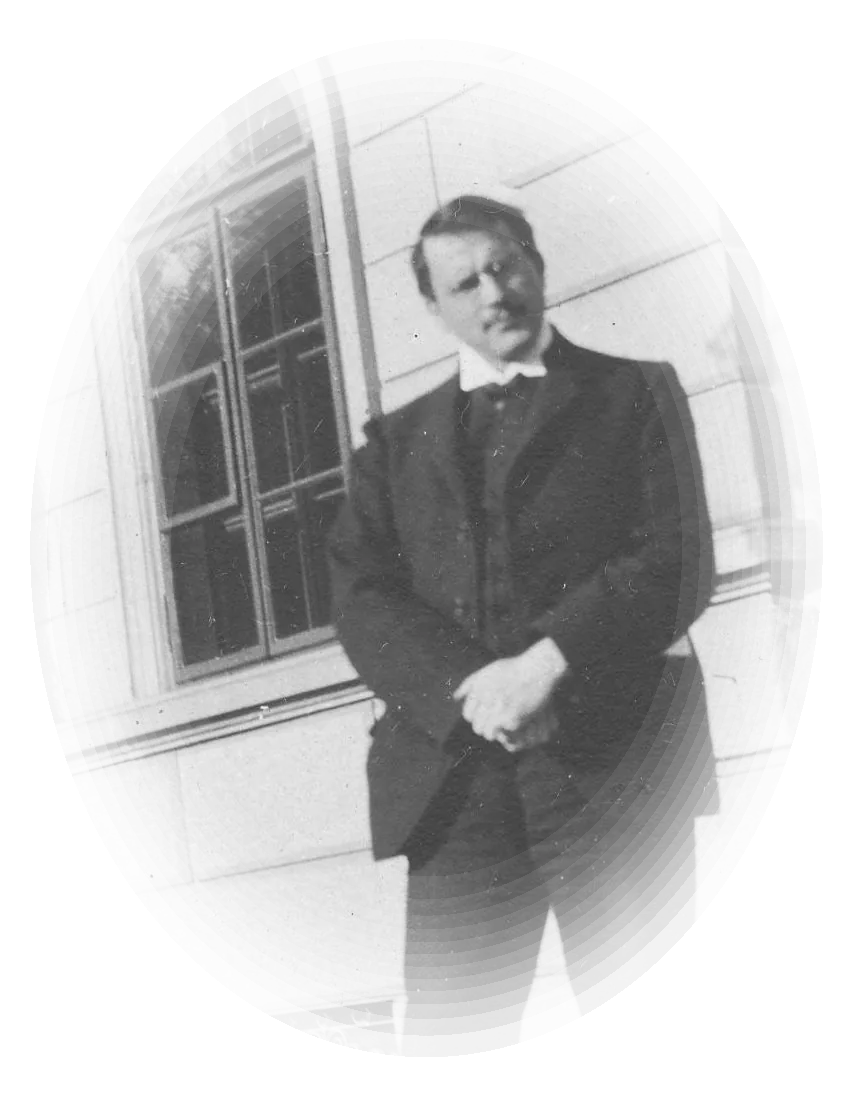
Carl Jung (1875-1961) was a Swiss psychiatrist who founded analytical psychology [1]. This page takes seven ideas about the side of ourselves we leave in the dark, one station at a time, and lets Jung speak first wherever his words can be quoted.
I Persona
The mask
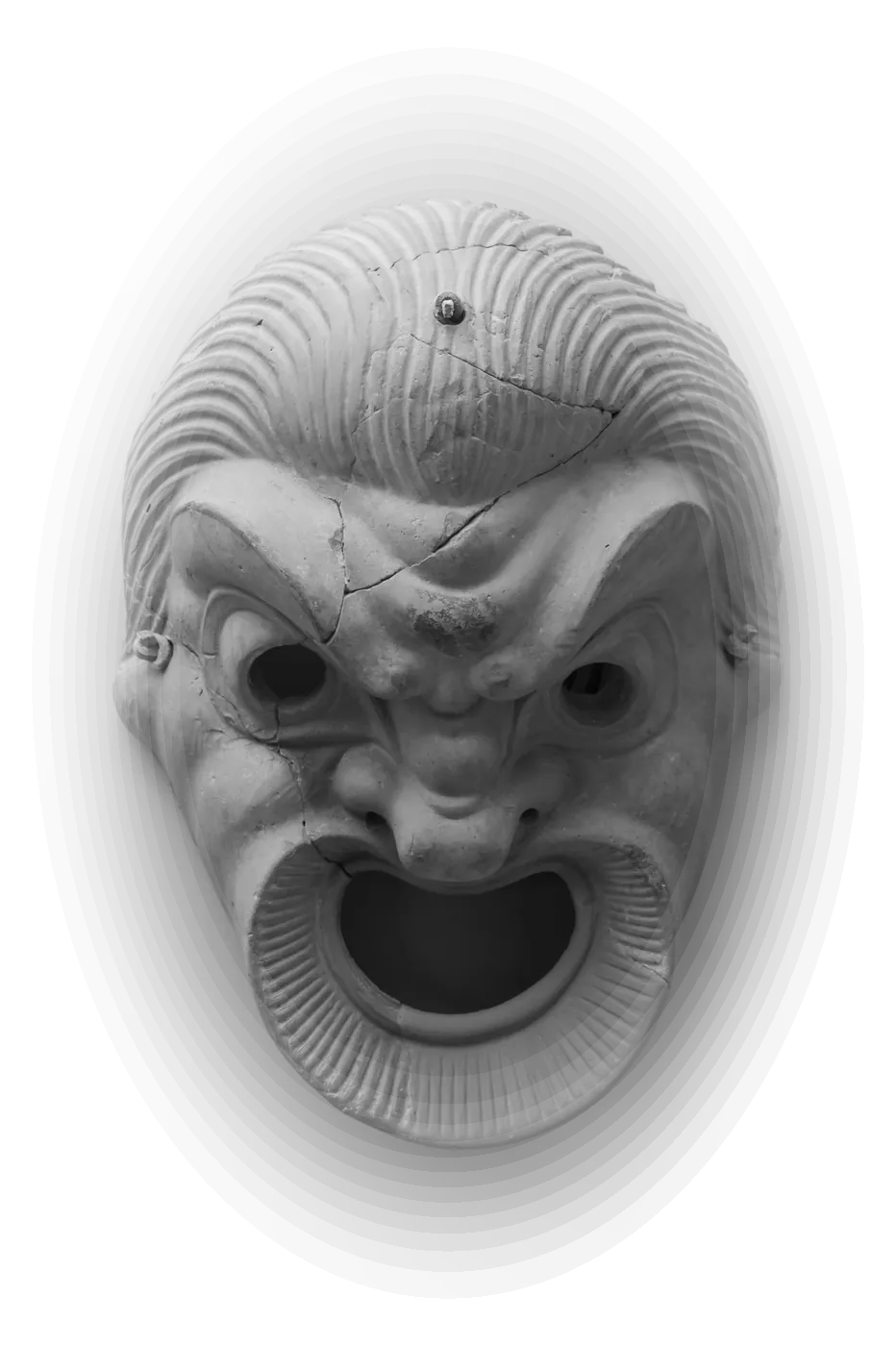
The word ‘persona’ is really a very suitable expression for it; since persona originally meant the mask worn by an actor to signify his rôle.
Two Essays on Analytical Psychology, tr. Baynes (1928), II, Part I ch. III “The Persona as a Part of the Collective Psyche”, pp. 164-165Public domain The persona, in Jung's use of the word, is the social face a person presents to the world, a kind of mask [2]. He took the word from the theatre, as the first quotation says.
The danger, as Wikipedia summarises it, is becoming identical with the persona [2]. The anecdote below is Jung's own.
When we analyse the persona we take off the mask; and then we discover that what seemed to be individual is at bottom collective, in other words, the persona was only the mask of the collective psyche. Fundamentally the persona is not real.
Two Essays on Analytical Psychology, tr. Baynes (1928), II, Part I ch. III, p. 165Public domain The pious Drummond once lamented the fact that “bad temper is the vice of the virtuous.” Obviously whoever builds up too good a persona has to pay for it in irritability.
Two Essays on Analytical Psychology, tr. Baynes (1928), II, Part II ch. II “Anima and Animus”, p. 209Public domain I once made the acquaintance of a very fine and honourable man, in fact one might almost have called him a saint. I studied him for three whole days, and never a mortal shortcoming did I find in him. My feeling of inferiority grew ominous, and I began seriously to think of how I might better myself. But on the fourth day his wife consulted me.
Two Essays on Analytical Psychology, tr. Baynes (1928), II, Part II ch. II, p. 209Public domain II Shadow
What the light leaves out
Everyone carries a shadow, and the less it is embodied in the individual’s conscious life, the blacker and denser it is.
Psychology and Religion: West and East, CW 11, Psychology and Religion (Terry Lectures, 1938), CW 11 ¶131 (p. 76)Short quotation In analytical psychology the shadow is an unconscious part of the personality that does not match the ego ideal, so the ego resists it and projects it [3].
The big line is from Jung's 1938 Terry Lectures [4]; the two under it are from a translation of the 1920s [5].
Since human nature is not constituted wholly of light, but also abounds in shadows, the insight and understanding gained in practical analysis is often somewhat painful, all the more painful, of course, the more one has previously neglected the other side (which is the rule rather than the exception).
Two Essays on Analytical Psychology, tr. Baynes (1928), II, Part I ch. II “Phenomena resulting from the Assimilation of the Unconscious”, p. 143Public domain A man of to-day, who corresponds more or less to the collective moral ideal, has made his heart into a den of murderers. This is not difficult to prove by the analysis of his unconscious, even though he himself is not in the least disturbed by the fact.
Two Essays on Analytical Psychology, tr. Baynes (1928), II, Part I ch. II, p. 159Public domain III Projection
Seen in others
Projections change the world into the replica of one’s own unknown face.
Aion, CW 9 part ii, Aion (1951), ch. 2 “The Shadow”, CW 9 ii ¶17Short quotation The shadow does not stay in the dark: it is projected onto the people around us [3].
Jung's example in the first quotation below is the devil.
Nor is he who projects necessarily a devil, although he must recognize that he too has in himself a devilish element which he has just stumbled upon, inasmuch as he projected it; but that does not make him a devil; indeed, he may be just as decent a man as the other.
Two Essays on Analytical Psychology, tr. Baynes (1928), I ch. VII “The Dominants of the Collective Unconscious”, p. 101Public domain All the illusory projections that he made upon the world and upon things come gradually back to him, jaded and worn out. The energy returning upon him from these relationships falls into the unconscious and activates all that he had hitherto neglected to develop.
Two Essays on Analytical Psychology, tr. Baynes (1928), I ch. IV “The Two Psychological Types”, p. 61Public domain IV The inferior function
The other side
The very essence of the inferior function is characterized by its autonomy. It is self-sufficient, it attacks, it fascinates, it entangles us, in such wise that we cease to be master of ourselves and become incapable of fair judgment between ourselves and others.
Two Essays on Analytical Psychology, tr. Baynes (1928), I ch. IV “The Two Psychological Types”, p. 58Public domain The 1928 essay reaches the inferior function through its chapter on the introvert and the extravert, "The Two Psychological Types" [5].
It means the side of a person that the habitual attitude leaves undeveloped.
Yet it is a necessity for the development of character that we should allow the other side, the inferior function, to find expression. We cannot permanently allow one part of our personality to be cared for symbiotically by another.
Two Essays on Analytical Psychology, tr. Baynes (1928), I ch. IV, p. 58Public domain V Confrontation
Meeting it
The shadow is a moral problem that challenges the whole ego-personality, for no one can become conscious of the shadow without considerable moral effort.
Aion, CW 9 part ii, Aion (1951), ch. 2 “The Shadow”, CW 9 ii ¶14Short quotation Wikipedia notes that the encounter with the shadow is a central part of individuation in Jung's account, and that he called it the first stage [3].
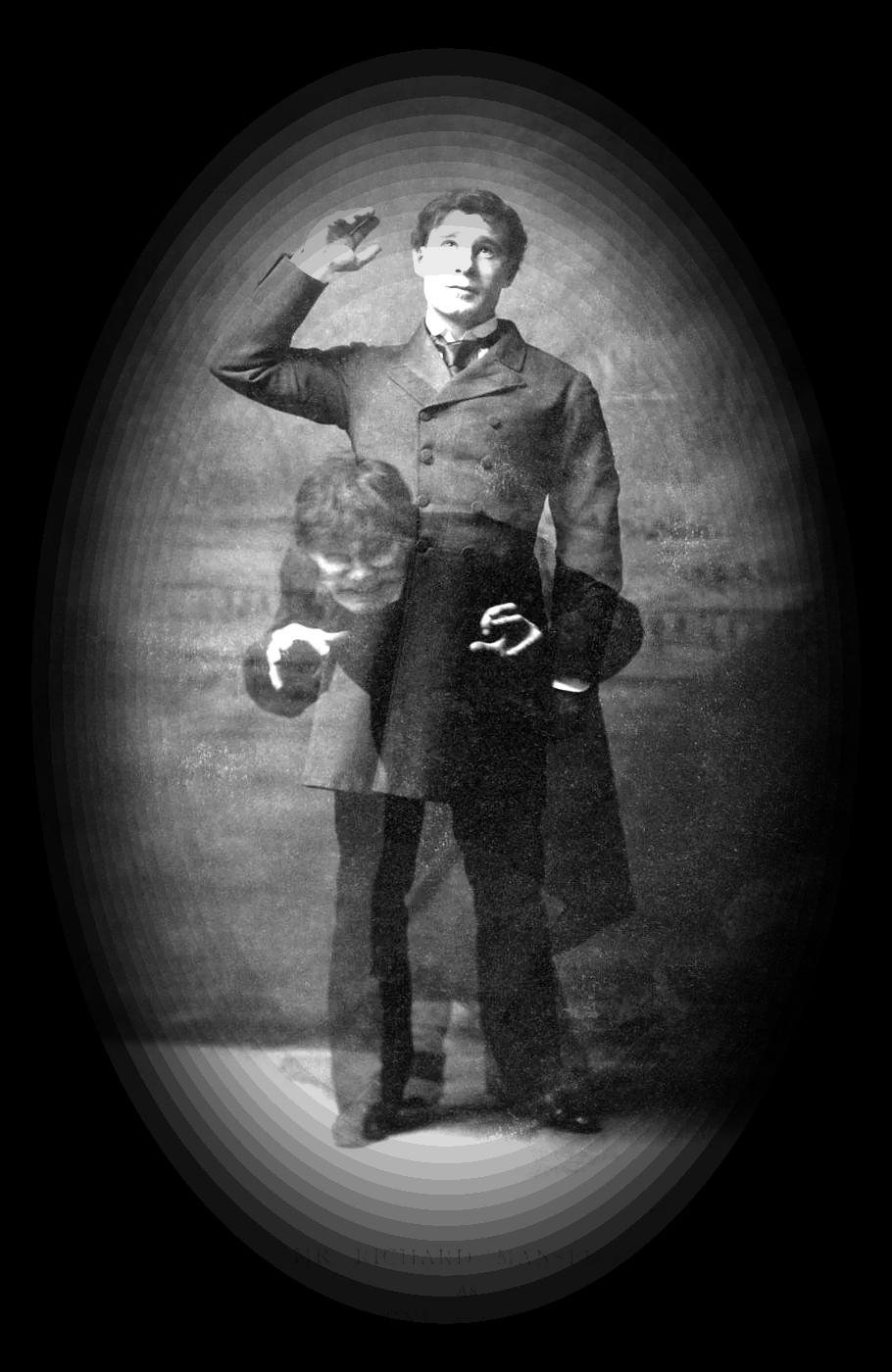
It also reports that Jung used Dr Jekyll and Mr Hyde as an example of being possessed by the shadow [3].
But the real therapy begins at the moment when the patient sees that it is no longer the father and mother who stand in his way, but himself — an unconscious part of the personality, that is to say, which plays the rôle of father and mother.
Two Essays on Analytical Psychology, tr. Baynes (1928), I ch. IV, p. 60Public domain This part is the opposite of his conscious attitude. It gives him no rest, and works continually as a hidden disturbance until it is accepted.
Two Essays on Analytical Psychology, tr. Baynes (1928), I ch. IV, p. 60Public domain We must indeed acknowledge that there is nothing more difficult to bear with than oneself.
Two Essays on Analytical Psychology, tr. Baynes (1928), II, Part II ch. III “The Technique of Differentiating between the Ego and the Figures of the Unconscious”, p. 251Public domain VI Nigredo
The blackening
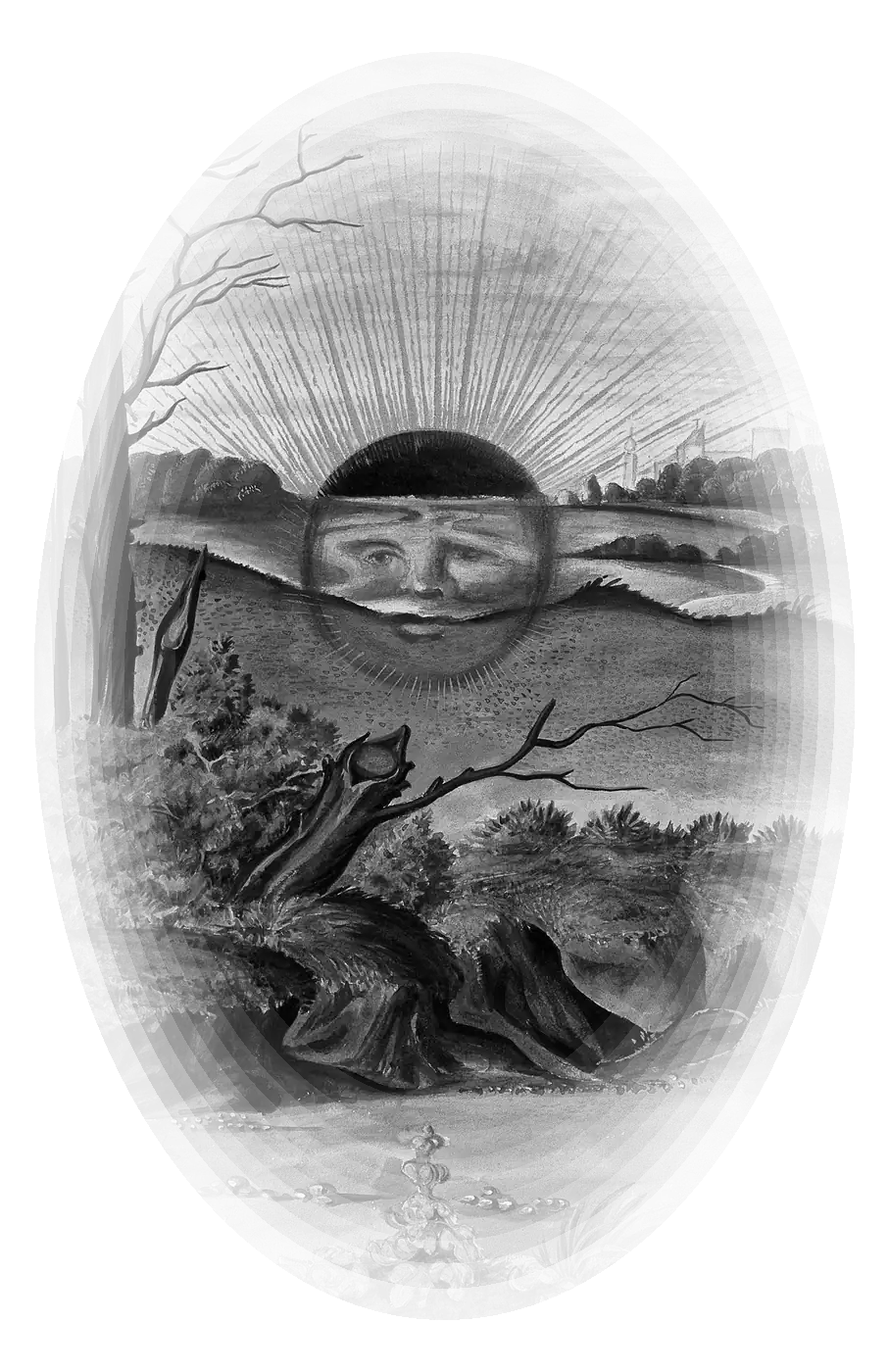
The nigredo or blackness … is the initial state, either present from the beginning as a quality of the prima materia …
Psychology and Alchemy, CW 12, Psychology and Alchemy (1944), Part III “Religious Ideas in Alchemy”, “The Alchemical Process and Its Stages”, CW 12 ¶334Short quotation Nigredo, or blackness, is an alchemical word for putrefaction, the first step toward the philosopher's stone [6].
In analytical psychology it became a metaphor for confronting the shadow within [6].
The wish is that the black water of death might be the water of life; that death, with its cold embrace, might be the mother’s womb, just as the sea devours the sun, but brings it forth again out of the maternal womb …
Psychology of the Unconscious, tr. Hinkle (1916), “Symbolism of the Mother and of Rebirth”, p. 245Public domain Therefore, when some great work is to be accomplished, before which weak man recoils, doubtful of his strength, his libido returns to that source — and this is the dangerous moment, in which the decision takes place between annihilation and new life. If the libido remains arrested in the wonder kingdom of the inner world, then the man has become for the world above a phantom, then he is practically dead or desperately ill. But if the libido succeeds in tearing itself loose and pushing up into the world above, then a miracle appears. This journey to the underworld has been a fountain of youth, and new fertility springs from his apparent death.
Psychology of the Unconscious, tr. Hinkle (1916), “The Battle for Deliverance from the Mother”, pp. 330-331Public domain The result is the upward movement in the flame, the transformation in the alchemical heat, the genesis of ‘pure spirit.’
Two Essays on Analytical Psychology, tr. Baynes (1928), II, Part II ch. III, p. 248Public domain VII Individuation
Whole, not perfect
Thus the self is also the goal of life, because it is the most complete expression of that fateful combination we call individuality.
Two Essays on Analytical Psychology, tr. Baynes (1928), II, Part II ch. IV “The Mana Personality”, p. 268Public domain Individuation, in analytical psychology, is the process by which the individual self develops out of an undifferentiated unconscious, ideally integrating the parts of the personality into a well-functioning whole [7].
Whole rather than perfect is this page's reading, not Jung's wording.
It is true to say that by their reciprocal functioning they constitute a totality, the self.
Two Essays on Analytical Psychology, tr. Baynes (1928), II, Part II ch. I “The Function of the Unconscious”, p. 188Public domain There is little hope that we shall attain to even an approximate consciousness of self, for no matter how much we make conscious, there will always be an indeterminate and indeterminable quantity of unconscious elements, which belong to the totality of the self.
Two Essays on Analytical Psychology, tr. Baynes (1928), II, Part II ch. I, pp. 188-189Public domain
The bookshelf
Everything Jung published, as Wikipedia lists it, in plain jackets.
As an Amazon Associate I earn from qualifying purchases.
Books in his lifetime
- Buy on Amazon
Conflicts in the Child's Soul
1910
- Buy on Amazon
Psychology of the Unconscious
1912
Revised as Symbols of Transformation in 1952.
- Buy on Amazon
Seven Sermons to the Dead
1916
Published privately; Wikipedia lists it as a part of the Red Book.
- Buy on Amazon
Psychological Types
1921
- Buy on Amazon
Modern Man in Search of a Soul
1933
A book of essays.
- Buy on Amazon
Psychology and Alchemy
1944
- Buy on Amazon
Aion: Researches into the Phenomenology of the Self
1951
- Buy on Amazon
Symbols of Transformation
1952
A revised edition of Psychology of the Unconscious.
- Buy on Amazon
Answer to Job
1954
- Buy on Amazon
Mysterium Coniunctionis: An Inquiry into the Separation and Synthesis of Psychic Opposites in Alchemy
1956
- Buy on Amazon
The Undiscovered Self
1957
- Buy on Amazon
Flying Saucers: A Modern Myth of Things Seen in the Skies
1959
- Buy on Amazon
Synchronicity: An Acausal Connecting Principle
1960
Published after his death
- Buy on Amazon
Memories, Dreams, Reflections
1962
The autobiography, co-written with Aniela Jaffé, per Wikipedia's list.
- Buy on Amazon
Man and His Symbols
1964
Jung wrote one part; the other four are by Marie-Louise von Franz, Joseph L. Henderson, Aniela Jaffé and Jolande Jacobi.
- Buy on Amazon
The Red Book: Liber Novus
2009
A manuscript Jung produced from about 1915 to 1932. Title only here: no images from it.
The Collected Works
- Volume 1Buy on Amazon
Psychiatric Studies
1957
- Volume 2Buy on Amazon
Experimental Researches
1973
- Volume 3Buy on Amazon
Psychogenesis of Mental Disease
1960
- Volume 4Buy on Amazon
Freud & Psychoanalysis
1961
- Volume 5Buy on Amazon
Symbols of Transformation
1967
A revision of Psychology of the Unconscious.
- Volume 6Buy on Amazon
Psychological Types
1971
- Volume 7Buy on Amazon
Two Essays on Analytical Psychology
1967
- Volume 8Buy on Amazon
Structure & Dynamics of the Psyche
1969
- Volume 9iBuy on Amazon
Archetypes and the Collective Unconscious
1969
Volume 9, part 1.
- Volume 9iiBuy on Amazon
Aion: Researches into the Phenomenology of the Self
1969
Volume 9, part 2.
- Volume 10Buy on Amazon
Civilization in Transition
1970
- Volume 11Buy on Amazon
Psychology and Religion: West and East
1970
- Volume 12Buy on Amazon
Psychology and Alchemy
1968
- Volume 13Buy on Amazon
Alchemical Studies
1968
- Volume 14Buy on Amazon
Mysterium Coniunctionis
1970
- Volume 15Buy on Amazon
Spirit in Man, Art, and Literature
1966
- Volume 16Buy on Amazon
Practice of Psychotherapy
1966
- Volume 17Buy on Amazon
Development of Personality
1954
- Volume 18Buy on Amazon
The Symbolic Life
1977
- Volume 19Buy on Amazon
General Bibliography (Revised Edition)
1990
- Volume 20Buy on Amazon
General Index
1979
- Volume ABuy on Amazon
The Zofingia Lectures
Year not given
Supplementary volume A; the article gives no year.
- Volume BBuy on Amazon
The Psychology of the Unconscious
Year not given
Supplementary volume B, the first version of Symbols of Transformation; the article gives no year.
Seminars
- Buy on Amazon
Analytical Psychology: Notes of the Seminar Given in 1925
1925
- Buy on Amazon
Dream Analysis: Notes of the Seminar Given in 1928-30
1928
- Buy on Amazon
Visions: Notes of the Seminar Given in 1930-34
1930
- Buy on Amazon
The Psychology of Kundalini Yoga: Notes of the Seminar Given in 1932
1932
- Buy on Amazon
Nietzsche's Zarathustra: Notes of the Seminars Given in 1934-39
1934
Two volumes.
- Buy on Amazon
Children's Dreams: Notes from the Seminar Given in 1936-1940
1936
Sources and credits
Notes and sources
- [1] Wikipedia: Carl JungReference. Carl Jung. Wikipedia, revision 1383783078.
- [2] Wikipedia: Persona (psychology)Reference. Persona (psychology). Wikipedia, revision 1380482148.
- [3] Wikipedia: Shadow (psychology)Reference. Shadow (psychology). Wikipedia, revision 1372863099.
- [4] Psychology and Religion: West and East, CW 11Primary source. C. G. Jung, Psychology and Religion: West and East, Collected Works vol. 11, translated by R. F. C. Hull, 2nd ed. Princeton: Bollingen Series XX / Princeton University Press, 1969 (the Terry Lectures, Psychology and Religion, 1938). Text read in the Jungian Center for the Spiritual Sciences' PDF.
- [5] Two Essays on Analytical Psychology, tr. Baynes (1928)Primary source. C. G. Jung, Two Essays on Analytical Psychology: I. The Unconscious in the Normal and Pathological Mind; II. The Relation of the Ego to the Unconscious. Authorized translation by H. G. and C. F. Baynes. London: Bailliere, Tindall and Cox, 1928. Internet Archive scan (DLI copy).
- [6] Wikipedia: NigredoReference. Nigredo. Wikipedia, revision 1332264667.
- [7] Wikipedia: IndividuationReference. Individuation. Wikipedia, revision 1360691228.
- [8] Contributions to Analytical Psychology, tr. Baynes (1928)Primary source. C. G. Jung, Contributions to Analytical Psychology, translated by H. G. and C. F. Baynes. First published in England 1928 (Kegan Paul; Harcourt, Brace, New York); the scan read is the 1948 fourth impression. Internet Archive.
- [9] Psychology of the Unconscious, tr. Hinkle (1916)Primary source. C. G. Jung, Psychology of the Unconscious: a study of the transformations and symbolisms of the libido, translated by Beatrice M. Hinkle. New York: Moffat, Yard and Company, 1916. Internet Archive scan.
- [10] Aion, CW 9 part iiPrimary source. C. G. Jung, Aion: Researches into the Phenomenology of the Self (1951), Collected Works vol. 9 part ii, translated by R. F. C. Hull, 2nd ed. Princeton: Bollingen Series XX / Princeton University Press, 1968. Internet Archive scan.
- [11] Psychology and Alchemy, CW 12Primary source. C. G. Jung, Psychology and Alchemy (1944), Collected Works vol. 12, translated by R. F. C. Hull, 2nd ed. Princeton: Bollingen Series XX / Princeton University Press, 1968. Text read in the Jungian Center for the Spiritual Sciences' PDF.
- [12] A Critical Dictionary of Jungian Analysis: ShadowReference. Andrew Samuels, Bani Shorter and Fred Plaut, A Critical Dictionary of Jungian Analysis (Routledge, 1986), entry "Shadow", as quoted with CW 11 para. 131 on the Pacifica Graduate Institute library guide.
- [13] ARAS concordance: Shadow as a moral problemReference. Archive for Research in Archetypal Symbolism (ARAS), concordance of Jung's Collected Works: "Shadow as a moral problem" (CW 9 part ii, paras. 14 and 17).
- [14] ARAS concordance: The alchemical process and its stagesReference. Archive for Research in Archetypal Symbolism (ARAS), concordance of Jung's Collected Works: "The alchemical process and its stages" (CW 12 para. 334).
- [15] Wikipedia: The Collected Works of C. G. JungReference. The Collected Works of C. G. Jung. Wikipedia, revision 1385520444.
Pictures
- Carl Gustav Jung, about 1909 (Library of Congress, Bain collection), Unknown author, about 1909. Licence: Public domain. Source: Wikimedia Commons.
- Terracotta comedy mask, Agora Museum, Athens, Jebulon, 2015-10-26. Licence: CC0 1.0. Source: Wikimedia Commons.
- The Sleep of Reason Produces Monsters (Los Caprichos, no. 43), Francisco Goya, about 1797-1798. Licence: Public domain. Source: Wikimedia Commons.
- Plato's Cave, 1604, Jan Saenredam, after Cornelis van Haarlem, 1604. Licence: Public domain. Source: Wikimedia Commons.
- The Flammarion engraving, from L'Atmosphere: Meteorologie Populaire (1888), Anonymous, 1888. Licence: Public domain. Source: Wikimedia Commons.
- Richard Mansfield as Dr Jekyll and Mr Hyde (double exposure), Henry Van der Weyde, about 1887-1895. Licence: Public domain. Source: Wikimedia Commons.
- A black sun with a face descends behind the horizon of a marsh (Splendor Solis), Wellcome Library, London, after Salomon Trismosin, 16th century. Licence: CC BY 4.0. Modified: cropped, converted to grayscale and made transparent for this page. Source: Wikimedia Commons.
- Ouroboros, from De lapide philosophico (1625), Lucas Jennis, 1625. Licence: Public domain. Source: Wikimedia Commons.