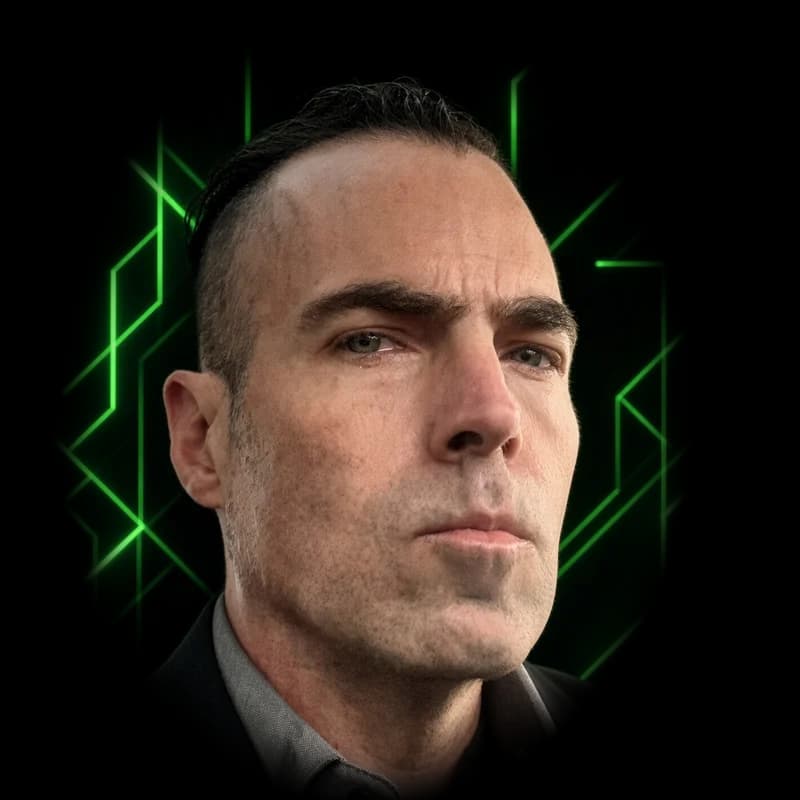
A discography film
Townes Van Zandt
A lawyer’s son from Fort Worth who played Houston bars for $10 a night, wrote “Pancho and Lefty”, watched it reach No. 1 for Willie and Merle eleven years later, and lived in a shack with no telephone.
Scroll to play the film. The pictures are made of dots: move over them, and play a sample to see them move with the music.
1944–1968
From Fort Worth to Houston
John Townes Van Zandt was born in Fort Worth, Texas, on March 7, 1944, into a wealthy family: one forebear had been a leader of the Republic of Texas, another a founder of Fort Worth. His father was a corporate lawyer whose work moved the family to Midland, Billings, Boulder and finally Houston. His father gave him a guitar for Christmas in 1956. Seeing Elvis on The Ed Sullivan Show, he said, “was the starting point for me becoming a guitar player.” He was a good student, and his parents groomed him to become a lawyer or a senator.
At the University of Colorado he wrote poetry and listened to Lightnin’ Hopkins and Hank Williams. In his second year his parents brought him home to Houston, worried about his binge drinking and depression. At the University of Texas Medical Branch in Galveston he was diagnosed with manic depression and given three months of insulin shock therapy, which erased much of his long-term memory. His mother later said it was the biggest regret of her life. In 1965 he began playing the Jester Lounge in Houston for $10 a night, and after his father died in January 1966 he left school and went on the road.
- When he tried to join the Air Force, a doctor rejected him as “an acute manic-depressive who has made minimal adjustments to life”.
- In the Houston clubs, the Jester and then the Sand Mountain Coffee House, where he played and sometimes lived, he met Lightnin’ Hopkins, Guy Clark, Jerry Jeff Walker and Doc Watson. His father had urged him to stop playing covers and write his own songs.
- In 1968 the songwriter Mickey Newbury met him in a Houston coffee shop and persuaded him to go to Nashville, where he introduced him to “Cowboy” Jack Clement, who became his producer.
- The sample is Hank Williams’s “I’m So Lonesome I Could Cry”, from a 1966 set at the Jester Lounge released in 2004.
Sources: Wikipedia: Townes Van Zandt, Wikipedia: Sand Mountain Coffee House, Apple Music: Live at the Jester Lounge. Photo: Schorle, CC BY-SA 3.0. Sample: a 30-second preview from Apple Music.
1968
For the Sake of the Song
Poppy · produced by Jack Clement and Jim Malloy at Bradley’s Barn, Mount Juliet, Tennessee, in April 1968
“Maybe she just has to sing, for the sake of the song”
Kevin Eggers, who ran Poppy Records, heard a demo of “Tecumseh Valley” and told Clement he would sign Townes on the spot. The debut was the label’s flagship, and Clement, who had engineered for Sam Phillips at Sun, dressed the songs in echo, organs, recorders and harpsichords. The biographer John Kruth wrote that Townes and his songs “were lost in a Phil Spector-like ‘Wall of Sound.’” Clement later said, “Maybe I overproduced it a little bit.”
“I sat in a chair and sang when they told me to,” Townes said. “I love the record because it was my first.” It came out shortly before Christmas 1968 to an indifferent public, and friends such as Guy Clark and Mickey Newbury disliked its gaudiness. He re-recorded most of its songs, stripped down, on the albums that followed.
- “Waitin’ Around to Die” was the first song he wrote, in a walk-in closet he had made into a studio in his first apartment with his wife, Fran. “I was expecting a love ballad or something,” she said.
- At Clement’s suggestion, he changed “whoring out on the streets” in “Tecumseh Valley” to “walking in the streets”.
- “‘For the Sake of the Song’ was written by the word,” he said. “I once sat down and wrote out the rhyme scheme for that song, and it was amazing.”
- The basic tracks were recorded live on a three-track machine before the overdubs.
Sources: Wikipedia: For the Sake of the Song, LRCLIB. Sample: a 30-second preview from Apple Music.
April 1969
Our Mother the Mountain
Poppy · produced by Jack Clement, Jim Malloy and Kevin Eggers; basic tracks in Los Angeles, overdubs in Nashville
“Hold me and tell me you’ll be here to love me today”
The second album took a lighter hand. James Burton, who had played behind Ricky Nelson and Elvis, and the session player Charlie McCoy were on it, and Townes re-recorded “Tecumseh Valley” because he disliked how it had been dressed on the debut. The title song is a minor-key waltz about a bewitched lover, with Jules Jacob’s flute; Kruth called it “otherworldly”.
Like most of his records it sold little, but it built his name as a songwriter’s songwriter. In 1971 Joe Ely picked Townes up hitchhiking near Lubbock, and was given a new copy of it as thanks. He and Jimmie Gilmore played it over and over for weeks. “It made us rethink what we were doing and what a song was all about.”
- The opening song, “Be Here to Love Me”, gave its name to the 2004 documentary about him. Norah Jones covered it on Feels Like Home.
- Allen Vogel took the cover photograph and Milton Glaser designed it, to make people ask, Glaser said, “What the hell is that?”
- Townes was carrying only his guitar and a backpack full of records when Ely picked him up.
Sources: Wikipedia: Our Mother the Mountain, LRCLIB. Sample: a 30-second preview from Apple Music.
September 1969
Townes Van Zandt
Poppy · produced by Kevin Eggers and Jim Malloy at Bradley’s Barn in July 1969
“But it’s easier than just a-waitin’ around to die”
The third album has ten of his own songs and shows off his uncluttered fingerpicking. Four of them are remakes from the debut, “Waitin’ Around to Die”, “I’ll Be Here in the Morning”, “For the Sake of the Song” and “(Quicksilver Daydreams of) Maria”, recorded again because he was unhappy with how lushly they had first been treated.
AllMusic’s William Ruhlmann wrote that its lyrics touched on desperate themes, “notably in the mining ballad ‘Lungs’”, while staying highly poetic. Fifty years on, Mark Lager called it and Our Mother the Mountain the strongest records of his career, because every song on them is his own.
- Sol Mednick photographed the cover in Milton Glaser’s kitchen, Townes at a table with his head in his hand and his eyes closed. Some fans call it the Kitchen Album.
- Steve Earle recorded four of its songs for his 2009 tribute, Townes.
- The Be Good Tanyas’ version of “Waitin’ Around to Die” plays in an episode of Breaking Bad.
Sources: Wikipedia: Townes Van Zandt (album), LRCLIB. Sample: a 30-second preview from Apple Music.
October 1970
Delta Momma Blues
Poppy · produced by Kevin Eggers and Ron Frangipane at Century Sound, New York
“Sorrow and solitude / These are the precious things”
Townes lived in New York for three years in the early 1970s, and made his fourth album there, with the blues in place of Nashville. Ron Frangipane, a pianist and string arranger who had studied under Stravinsky, and the engineer Brooks Arthur stripped away most of the ornament. “Townes was essentially an American storyteller,” Frangipane said, “like a guy sitting on a porch, talking to you.”
It holds two of his darkest songs. Listeners assume “Nothin’” is about drug addiction, but he said he wrote it straight after reading Kazantzakis’s The Last Temptation of Christ; he wrote “Rake” in Wilmington, Delaware, after reading Kazantzakis’s Saint Francis. It did not sell, but it confirmed him as one of the songwriters of his generation.
- “I thought when I wrote ‘Tower Song’ that I was writing to someone else,” he wrote. “Now I’m not sure that I wasn’t writing it to me.”
- The title song was his first co-write on one of his own albums, written with two friends when the three played as the Delta Mama Boys in an Austin club.
- On the cover he leans in an East Village doorway with a copy of The Last Unicorn in his jacket pocket.
- Robert Plant and Alison Krauss recorded “Nothin’” on Raising Sand.
Sources: Wikipedia: Delta Momma Blues, Wikipedia: Townes Van Zandt, LRCLIB. Sample: a 30-second preview from Apple Music.
December 1971
High, Low and In Between
Poppy · produced by Kevin Eggers at Larrabee Sound, Los Angeles, in April 1971
“So shake the dust off of your wings”
The songs swing between sin and salvation: the drunk in “No Deal” will take his chances down below if heaven has no whiskey, while “Two Hands” and “When He Offers His Hand” are gospel. Of all his songs, he said, “if I were forced at knifepoint to choose one, it would be ‘To Live Is To Fly.’”
His girlfriend Leslie Jo Richards was murdered while hitchhiking back to Houston from the sessions, and his guitarist Mickey White said it left him “devastated”. He was also in the grip of a heroin habit that stayed with him all his life. His road manager Harold Eggers wrote that a couple of weeks later Townes overdosed in Houston and was revived at Ben Taub Hospital.
- “I wrote ‘Mr. Mudd and Mr. Gold’ in a sort of frenzy,” he said. “Even I don’t know what that song means.”
- Steve Earle first met him at a Houston club, where Townes heckled him to play “Wabash Cannonball”. Earle answered with “Mr. Mudd and Mr. Gold”, which silenced him.
- Reviewing it in 1971, John Lomax III wrote, “Dylan wrote this way once. Hank Williams wrote like this. Nobody does anymore.”
Sources: Wikipedia: High, Low and In Between, LRCLIB. Sample: a 30-second preview from Apple Music.
September 1972
The Late Great Townes Van Zandt
Poppy · produced by Jack Clement, with Kevin Eggers
“Pancho was a bandit, boys”
His last studio album for the failing Poppy label holds “Pancho and Lefty” and “If I Needed You”. Eggers wanted to add drums to “Pancho and Lefty”; Townes refused. He said he dreamed “If I Needed You” and wrote the words down when he woke; Loop and Lil, in its lyric, were a pair of parakeets he carried with him. Doc Watson recorded it first, in 1973.
Eggers said he chose the title hoping for a “Paul is dead” kind of hoax; Kruth suggests it came from a night in 1972 when Townes overdosed on heroin and nearly died. Neither the album nor the song charted. “It was like we gave a party and nobody came,” Eggers said. “Nothing happened with ‘Pancho and Lefty’ for ten years.”
- Townes said “Pancho and Lefty” “came from out of the blue” and that he did not intend Pancho to be Pancho Villa.
- “Fraulein” had been his father’s favourite country song.
- Milton Glaser designed the sleeve to look like an old funeral card, with Gothic lettering over Steve Salmieri’s photograph.
- Rolling Stone put his “Pancho and Lefty” at No. 498 of the 500 greatest songs of all time in 2021.
Sources: Wikipedia: The Late Great Townes Van Zandt, Wikipedia: Pancho and Lefty, LRCLIB. Sample: a 30-second preview from Apple Music.
July 1973
Live at the Old Quarter, Houston, Texas
Tomato, released May 1977 · recorded by Earl Willis on a portable four-track
“Ride the blue wind high and free”
Over five sweltering nights in July 1973, Townes played alone with his guitar at the Old Quarter, a Houston bar owned by his friend Rex “Wrecks” Bell and Dale Soffar. Kruth wrote that nearly a hundred people packed each set, so tightly that waitresses could not reach them and money was passed hand over hand to the bar. He apologised for the broken air conditioning, then played “Pancho and Lefty” to people who had never heard it. “I’ve never heard it so quiet in here.”
The tapes sat for four years, while a dispute between Clement and Eggers held up the studio album that should have followed The Late Great, until Eggers put them out on his new label, Tomato. Critics who had complained about the overproduction of his records were euphoric, and many count it among the best albums he made.
- “Rex’s Blues” is about Rex Bell.
- The LA Times called him “a cross between Woody Guthrie and Leonard Cohen”.
- The Old Quarter closed in 1979. In 1996 Bell reopened it as the Old Quarter Acoustic Cafe in Galveston.
- When it finally came out, Townes said, “I was out of the chute on a brand new horse, right?”
Sources: Wikipedia: Live at the Old Quarter, Wikipedia: Old Quarter Acoustic Cafe, Wikipedia: Townes Van Zandt, LRCLIB. Sample: a 30-second preview from Apple Music.
1975–1976
Heartworn Highways
In the last weeks of 1975 and the first of 1976, James Szalapski filmed some of the founders of outlaw country in Texas and Tennessee: Guy Clark, a young Steve Earle and Rodney Crowell, David Allan Coe, Charlie Daniels and Townes. He found Townes at his run-down trailer in Austin with his girlfriend Cindy and his half-wolf dog Geraldine, drinking straight whiskey in the middle of the day, playing with guns, and playing “Waitin’ Around to Die” and “Pancho and Lefty”.
He was the only one in the film who played straight to the camera, and Earle said he “stole that entire film”. Around then he left Eggers for a new manager, John Lomax III, whose small fan club brought hundreds of letters, some from people who said his songs helped them through depression. From 1976 he lived quietly outside Nashville in a tin-roofed shack with no heat, plumbing or telephone.
- The film ends with a party at Guy Clark’s house in Nashville that runs from Christmas Eve into Christmas Day.
- It was not released until May 1981.
- In 1976 Harold Eggers, Kevin’s brother, was hired as his tour manager and round-the-clock caretaker, and stayed for the rest of his life.
- Townes’s trailer stood at what is now 11th and Charlotte, in Austin’s Clarksville neighbourhood.
Sources: Wikipedia: Heartworn Highways, Wikipedia: Townes Van Zandt. Photo: William Wallace, CC BY 2.0.
May 1978
Flyin’ Shoes
Tomato · produced by Chips Moman at American Studios, Nashville, in January 1978
“Baby, it won’t be long ’fore I be tyin’ on my flyin’ shoes”
In 1973 he had recorded an album called 7 Come 11 with Clement, but Eggers did not pay for the sessions and Clement held on to the tapes. “That was the sort of missing link in his career,” Lomax said. Poppy went under, and by 1978 Townes had released no new songs in five years. He was living with Cindy in a cabin in Franklin, Tennessee, where, Earle recalled, he listened to Paul Harvey every morning and watched Happy Days, and the stagnation made his drinking and drug use worse.
He went back to Eggers, signed to Tomato, and remade the 7 Come 11 songs with Chips Moman, Spooner Oldham and Randy Scruggs, arriving with his strumming hand broken in a car crash. AllMusic found “not a dud in the bunch”; Kruth heard Townes “lost in a fog of vodka”. It was his last album for nine years.
- He wrote “Flyin’ Shoes” sitting by the Harpeth River, where the Battle of Franklin was fought. Cindy believed it was about him leaving her to go on the road.
- “Pueblo Waltz” sends greetings to his friends Guy and Susanna Clark.
- The Boston Globe called “Loretta” “one of the most heartfelt songs ever written about a barmaid”.
- The 7 Come 11 tapes finally came out in 1993, as The Nashville Sessions.
Sources: Wikipedia: Flyin’ Shoes, Wikipedia: Townes Van Zandt, LRCLIB. Sample: a 30-second preview from Apple Music.
1983
Pancho and Lefty
Merle Haggard and Willie Nelson · Pancho & Lefty, Epic · produced by Chips Moman, Haggard and Nelson
“The poets tell how Pancho fell”
Emmylou Harris recorded “Pancho and Lefty” in 1977, and in 1981 she and Don Williams took “If I Needed You” to No. 3 on the country chart. Then Willie Nelson, finishing a duet album with Merle Haggard, felt it lacked one big song for a single and a video. His daughter Lana suggested “Pancho and Lefty”, which neither man had heard. Nelson cut it with his band in the middle of the night and fetched Haggard, asleep on his bus, to sing his part. When Haggard wanted another go the next day, Nelson told him it had already gone to New York.
It topped Billboard’s country chart on July 23, 1983. Townes played a captain of the federales in the video, for about $100 a day. The royalties brought him money he badly needed, and by the end of his life his yearly income was over $100,000, mostly from other singers’ versions of his songs. In March 1983 he married Jeanene Munsell; their son Will was born ten days later.
- When Nelson asked him what the song was about, Townes said he didn’t know.
- When “If I Needed You” was on the charts, Townes rang his first wife, Fran, in the middle of the night: “Babe, we finally made it!”
- Pulled over for speeding in Texas, he told the two policemen he had written “Pancho and Lefty”. Their radio code names were Pancho and Lefty, and they let him off with a warning.
- Chips Moman, who produced Flyin’ Shoes, co-produced the Haggard and Nelson record.
Sources: Wikipedia: Pancho and Lefty, Wikipedia: Pancho & Lefty (album), Wikipedia: The Late Great Townes Van Zandt, Wikipedia: Townes Van Zandt, LRCLIB. Sample: a 30-second preview from Apple Music.
March 31, 1987
At My Window
Sugar Hill · produced by Jack Clement and Jim Rooney at Cowboy Arms, Nashville
“If three and four were seven only / Where would that leave one and two?”
With royalties coming in, Townes had what was for him a stable home for the first time, with Jeanene and Will, and took up boating. His only studio album of the 1980s brought in Mark O’Connor on fiddle and mandolin and Willie Nelson’s harmonica player, Mickey Raphael. Clement thought it the best Townes album he worked on; Mickey White said Townes no longer fingerpicked or sang with the energy he once had.
In The New York Times, Robert Palmer wrote, “Nobody writes songs about love affairs gone wrong with as much tenderness and insight.” Kruth heard the weathered voice of “a grateful survivor”.
- Some copies carried a sticker with Steve Earle’s line: “Townes Van Zandt is the best songwriter in the whole world and I’ll stand on Bob Dylan’s coffee table in my cowboy boots and say that.” Townes answered, “I’ve met Bob Dylan’s bodyguards, and I don’t think Steve could get anywhere near his coffee table.”
- He wrote “Ain’t Leavin’ Your Love” the day after Jeanene brought their newborn son home.
- On stage he joked that “Buckskin Stallion Blues” was half about a woman and half about a horse, and that he missed the horse.
- The year before, he had met Dylan by chance outside a costume shop in Austin. Dylan later boarded Townes’s motorhome and asked him to play some songs.
Sources: Wikipedia: At My Window, Wikipedia: Townes Van Zandt, LRCLIB. Sample: a 30-second preview from Apple Music.
November 1994
No Deeper Blue
Sugar Hill · produced by Philip Donnelly at Xeric Studios, Limerick, Ireland
“In my heart I know it’s a little boy”
In 1990 he opened for the Cowboy Junkies across the US and Canada, in front of a younger audience, and his longest stretch of sobriety as an adult, about a year, ran through 1989 and 1990. For his last widely released album he woke from a dream telling him to make it in Ireland with Philip Donnelly, who had played on Flyin’ Shoes, found Donnelly’s number on a piece of paper and rang him in the night. “It’s as good as I’ve ever done, I think,” he said. “Irish boys on it.”
All fourteen songs were new, from lullabies for his children Will and Katie Belle to “Marie”, about a homeless couple living under a bridge, one of the darkest songs he wrote. Guy Clark remembered him playing it in Santa Monica from a sheet of paper on his knee: “Man, I just wrote this this morning.” That night he played it on stage and remembered every word.
- Donovan plays harmonica on two songs.
- He wrote “Hey Willy Boy” overnight for a lullaby album, after the label told him there was money in it.
- Out of that tour came “Cowboy Junkies Lament”, written for the band, with a verse about each member.
- Jeanene was the executive producer; Harold Eggers was the project agent.
Sources: Wikipedia: No Deeper Blue, Wikipedia: Townes Van Zandt, LRCLIB. Sample: a 30-second preview from Apple Music.
January 1, 1997
New Year’s Day
He kept writing and touring into the 1990s, but more slowly. He was drinking again in his last years, and in 1994 a doctor warned that another detox could kill him; friends said he seemed to have “withered”. In 1996 Steve Shelley of Sonic Youth offered to make an album with him, and sessions were booked in Memphis for late December. Days before, he fell down the concrete steps outside his home and badly hurt his hip, but refused treatment. He arrived at the studio in a wheelchair, and Shelley cancelled the sessions.
He agreed to go to hospital only eight days after the fall. On December 31, X-rays showed a broken hip, and he had surgery. He was checked out early the next morning, already showing signs of delirium tremens, and died at home in Smyrna, Tennessee, in the early hours of January 1, 1997, at 52, of cardiac arrhythmia. There were two services, one for family in Texas and one in a large Nashville church, and some of his ashes lie in the family plot at Dido, near Fort Worth.
- He died on the forty-fourth anniversary of the death of Hank Williams, whom critics had long compared him with.
- He left a shoebox of unpublished poems and lyrics for the Israeli singer David Broza to set to music. They became the album Night Dawn.
- His father had also died at 52.
Sources: Wikipedia: Townes Van Zandt, Wikipedia: At My Window. Photo: In defense, CC BY-SA 4.0.
2009
Townes
Steve Earle · New West · produced by Earle, released May 12, 2009
Interest in him grew after he died. The documentary Be Here to Love Me, which the Village Voice called “sympathetic but frank”, came out in 2004, and two biographies followed, John Kruth’s in 2007 and Robert Earl Hardy’s in 2008. His recording of the Rolling Stones’ “Dead Flowers” plays over the end of The Big Lebowski, and his songs have turned up in Breaking Bad, True Detective and Three Billboards Outside Ebbing, Missouri.
Steve Earle met him in 1972, took him as a mentor and named his son Justin Townes Earle after him. In 2009 he released Townes, an album of his songs, some of which he had played his whole career and some he learned for the record. It won the Grammy for Best Contemporary Folk Album. Of his old coffee-table line, Earle told the New York Times that year, “Did I ever believe that Townes was better than Bob Dylan? No.” But, he said, “As a songwriter, you won’t find anybody better.”
- On “Mr. Mudd and Mr. Gold”, the sample, Steve and Justin Townes Earle trade verses. Tom Morello plays electric guitar on “Lungs”.
- Townes was inducted into the Austin City Limits Hall of Fame in 2015. Gillian Welch told how he came to her early shows in Nashville and gave her the confidence to write sad songs.
- Jewel named her son Kase Townes Murray.
Sources: Wikipedia: Townes (album), Wikipedia: Townes Van Zandt. Sample: a 30-second preview from Apple Music.
Sources
- Wikipedia: Townes Van Zandt · Wikipedia, "Townes Van Zandt"
- Wikipedia: Sand Mountain Coffee House · Wikipedia, "Sand Mountain Coffee House"
- Apple Music: Live at the Jester Lounge · Apple Music, Live at the Jester Lounge (Houston, TX. 1966) (track list and release)
- Wikipedia: For the Sake of the Song · Wikipedia, "For the Sake of the Song (Townes Van Zandt album)"
- Wikipedia: Our Mother the Mountain · Wikipedia, "Our Mother the Mountain"
- Wikipedia: Townes Van Zandt (album) · Wikipedia, "Townes Van Zandt (album)"
- Wikipedia: Delta Momma Blues · Wikipedia, "Delta Momma Blues"
- Wikipedia: High, Low and In Between · Wikipedia, "High, Low and In Between"
- Wikipedia: The Late Great Townes Van Zandt · Wikipedia, "The Late Great Townes Van Zandt"
- Wikipedia: Pancho and Lefty · Wikipedia, "Pancho and Lefty"
- Wikipedia: Live at the Old Quarter · Wikipedia, "Live at the Old Quarter, Houston, Texas"
- Wikipedia: Old Quarter Acoustic Cafe · Wikipedia, "Old Quarter Acoustic Cafe"
- Wikipedia: Heartworn Highways · Wikipedia, "Heartworn Highways"
- Wikipedia: Flyin’ Shoes · Wikipedia, "Flyin' Shoes"
- Wikipedia: Pancho & Lefty (album) · Wikipedia, "Pancho & Lefty (album)"
- Wikipedia: At My Window · Wikipedia, "At My Window (album)"
- Wikipedia: No Deeper Blue · Wikipedia, "No Deeper Blue"
- Wikipedia: Townes (album) · Wikipedia, "Townes (album)"
- LRCLIB · LRCLIB lyric database, for the exact wording of each quoted line